Episode Transcript
[00:00:00] Speaker A: And striving is one of those words. And it really comes back to. And you helped to clarify this, maybe even on a recording before that. There is still a striving in place. But we don't strive to become something we really. So we don't strive for. We strive from.
[00:00:17] Speaker B: From.
[00:00:18] Speaker A: Yeah. And what that looks like is trusting. Yeah. So I'm trusting this reality. And I'm able to strive from a place of newness, from rest, from peace, from this new person I am as a saint. And just that alone actually sets the stage for us to really just be everything that we're supposed to be. And to be right where we are is exactly where we're supposed to be. And we can rest in that. We can trust that. Hello, we welcome you back. It's let's Talk Life, a podcast where we get to discuss life in Christ. And life in general can feel like a roller coaster. And I don't like roller coasters. Do you like roller coasters, Scara?
[00:01:05] Speaker B: They hurt.
Jostle around.
[00:01:08] Speaker A: The older you get, the worse they get. But I've never liked roller coasters, but I was on one a little bit this week. Not literally, but figuratively. And that's why we're diving and to this topic that we talk about often, trust.
It's interesting how quickly we can jump into trusting myself, trusting our own efforts, instead of trusting the work that's already been accomplished on the cross by Jesus.
[00:01:38] Speaker B: Yeah, that's so good.
[00:01:39] Speaker A: I don't know how that resonates with you, Carl.
[00:01:42] Speaker B: Yeah, man. I want to hear about this roller coaster.
[00:01:44] Speaker A: Yeah. And for now, I'm not going to go into specifics, but I, I took a part time gig, you know, of a ministry and it ended before it really started, by my own choosing. Because going into it all, going through training, dude, there's a lot of details to the whole thing and I really appreciated it, I really enjoyed it and I love their heart and what they're all about. But I came to this realization on day one of last week, just going and being introduced to the beginning of this whole thing. And I just recognized, I just had this overwhelming sense of this isn't where I'm supposed to be, this isn't what I'm supposed to be doing. And so the question, I guess was why am I here? Why did I get to this place?
[00:02:35] Speaker B: How did I get here? How did I find myself here?
[00:02:38] Speaker A: Right? And ultimately it was, it was me trusting myself to take care of my needs. Because why do you take a part time job? It's like, well, because you need the income. And so my fear was, how am I going to provide for my family? And so I went into this provider mode, I went into this producer mode. Those are two. Two phrases I wrote down here, because that's what we do. And the reality is.
[00:03:03] Speaker B: Yeah, go ahead.
[00:03:04] Speaker A: Yeah, yeah. I mean, yeah, I mean, I'll share it. So. So just last night, you know, I have a book study we've been going through, Stunned by Grace, by Frank Friedman. And he asked this question, and this resonated so well with this exact roller coaster that I was on. He asked this question, what is the supreme issue of your life? And he gives a list of things, and money was at the beginning of it. And. And that's just a few options. There are plenty more that to the list. And I just, I resonated right away. One of the other guys too resonated right away with, I have this fear because what's next? What. What am I going to be doing with my life? Where am I going from here? How am I going to provide for my family? But Frank says, whatever your answer.
Yeah. To that question, you're looking to someone or something in your life to provide life for you.
And it's. As a result, that's going to be the supreme issue in your life. You're going to be so focused on that that it's going to bring a lot of emotion, a lot of fear, a lot of instability. And so for me recently, like I said, it was. It was money. So that object that I chose to focus became the nominating factor of my life. To where then I stepped into doing because I thought this is what I need to do in order to provide. So like I said, I stepped into that provider mode. And because. Because a good man provides for his family. Right. And that's the mentality that you have. And so the truth is that. That I'm not. I'm not the provider any more than I'm the producer of the fruit in my life. God is my provider. God is the one that produces fruit. Yeah, We. We get to all glory to God. We get to be a part of that glorious work of bearing that fruit. But I'm not. I don't have to produce it.
Right. A fruit tree doesn't need to work hard to produce that fruit. A fruit tree just needs to be a fruit tree, which is.
[00:04:54] Speaker B: Which is the spiritual image that Jesus leaves us to.
[00:04:57] Speaker A: Right, Right.
[00:04:59] Speaker B: So it's not you working harder to produce more fruit. It's abiding in Jesus, and you bear It.
[00:05:03] Speaker A: Right.
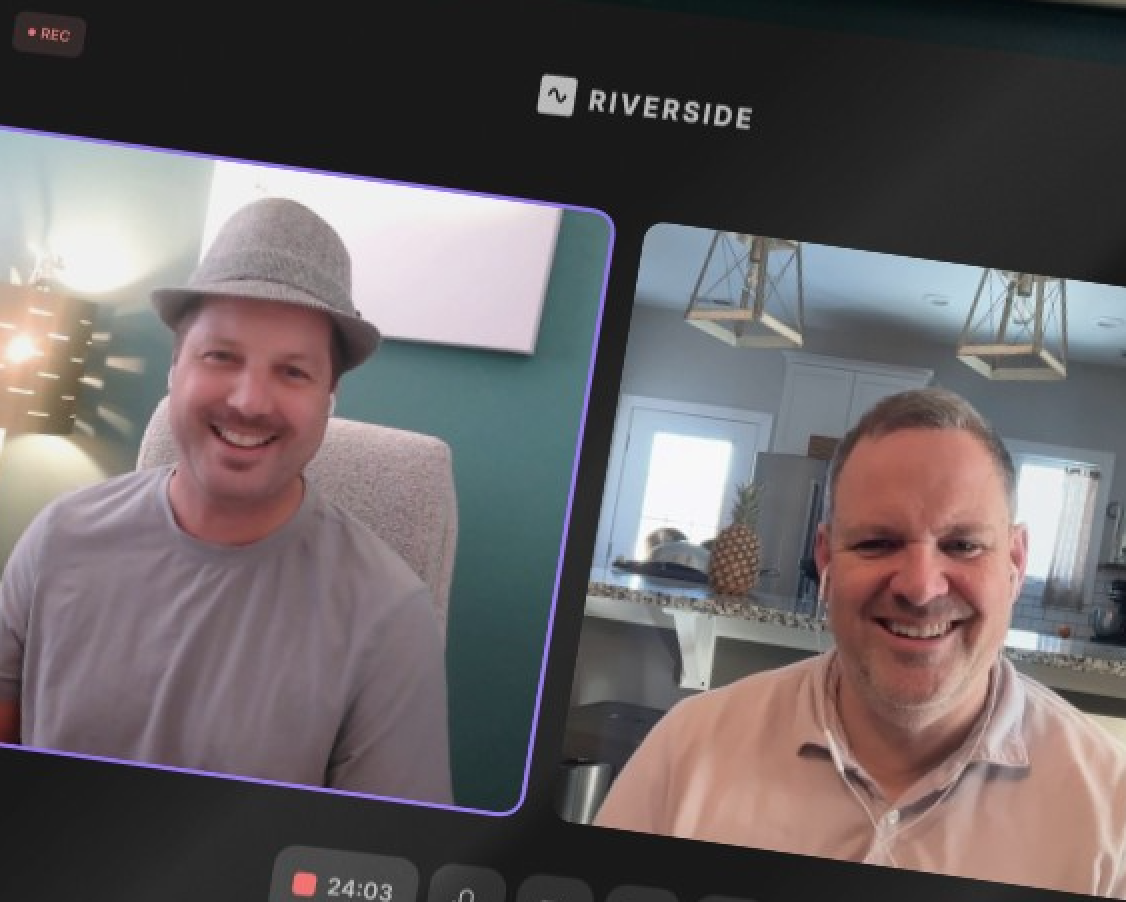
Speaking of fruit, that pineapple looks really good behind you.
[00:05:07] Speaker B: Oh, thank you.
[00:05:09] Speaker A: So.
[00:05:10] Speaker B: This is so good, Zach. Thank you for your vulnerability. And I think it's very helpful for, for me, for those listening to say, man, this is Christ's life. So, so there. You know, Paul says the Church of Thessalonian Thessalonica, he says, hey, work with your hands. Stop being idle. Stop being a busy body.
[00:05:27] Speaker A: Go work.
[00:05:28] Speaker B: He says to Timothy, if you don't provide for your family, you're worse than unbeliever. Like, stop being lazy. And so, um, when I'm in that mode, I'm gonna, I'm going to, I could, I guess become captivated with this idea that it's all up to me, it's all up to me to figure it all out. You know, my family's counting on me.
And instead of the, the reminder that God, you are my provider, you know, Philippians 4:19, God, you're going to provide all my needs, all everything. God, you're. You're going to provide. And so, God, you're my provider. God, you're my sustainer. God, that it's, that it's not up to me.
[00:06:06] Speaker A: That's right.
[00:06:06] Speaker B: You know, one of the prayers that Scott, our buddy, our good friend Scott prayed over us in 2020 is that that God would sabotage anything that wasn't from God. Like he says, like that's, that's. He says that's his prayer for himself. So that it totally takes away that option off the table. Like, it's so sad. And so think about this. So, so you're like, well, God is just from you. And you know, it seems like it's good, good. It's, it's mission minded, you know, it's kingdom minded. It's. It's for you, it seems. It sounds like even from things that you've shared on or off camera, that it was a sabotage.
That, that it was clear to you that this wasn't for you. Like to me, like, that's the part of trust. So, so when we trust God, so sometimes when we think, oh, I gotta follow God's will, so I'm a. So then, so then I become captivated. Well, what if it's not God's will? What if it's. What, what if God's will? God's will is to go here. God's will to go here. Trashing God means. You know what, God, if this isn't what you have for me, I trust that you're going to close that door. Like you'll make it so clear that this isn't for me, you know, in this season, or this isn't for me right now, or this isn't for me at all. I don't know if any of that.
[00:07:19] Speaker A: Resonates with you, man, but no, it does, 100%. Thank you. I mean I just, I recognize right off, off the bat, you know, there were expectations. And it was so interesting because I kind of, I made this decision, I sent an email saying, hey, I want to be upfront about where I'm at in all of this. And, and then I very studied the same chapter that out of stunt by grace, I shared this with you already. Expectations, he says, are law based. I thought, wow, that was, that is so interesting because I've had this, this kind of fascination with that whole mindset of expectations because it's, there's one part, and I brought this up last night as a question, like, don't you in a relationship have some expectations on like your spouse? I mean, if you do have a full time job, doesn't your spouse kind of have an expectation that you're going to go and fulfill that role so that you have an income? Like, isn't there some expectation? And it's interesting to like just chew on that because it really does come back to am I living from or am I living for? And that's. It goes exactly the same way with expectation. Am I living out of these expectations so that I can prove that I am something or that I'm trying to be something that I'm not already? Or am I living from this reality that this is who I am? And so therefore I'm fulfilling these expectations that you might have for me. And along the way I'm also going to fail. And that's where the other person has to recognize that I'm not Jesus. And for me, you're not a good Jesus. For me, I need to trust in the one that ultimately is the most satisfied, satisfying and fulfilling person in my life. And that can only be God. So it was just neat that in the same weekend of where I'm like, okay, I gotta send this email, I gotta make this choice that God was at the same time in the very chapter that we're studying for that, that same weekend the guy was saying, yeah, expectations are very law based. And so that, that's what I saw. That's what I saw. It was like, yeah, there's these expectations that they have of me that going into it I was like, this is supposed to be a part time thing. And it was already pulling me into more than what was asked. And so I just had to say something. I had to speak up and make a decision and better now than down the road. And that's, that's the way that I saw it. Right. For them and for me.
[00:09:39] Speaker B: And I love that you said earlier, you know, just where are you today? You know, with the feelings wheel? And you're like, hey, I'm trusting. I'm trusting.
[00:09:46] Speaker A: Right?
[00:09:47] Speaker B: Because law based living leaves me insecure and anxious and scared. And I can find myself like all the, throughout a day, right? Throughout a day, throughout, throughout. Even a conversation, you can find yourself gravitating to trying to control, which is law based. It's not trusting at all.
[00:10:07] Speaker A: Right. And I didn't. Go ahead.
No, go, keep going.
[00:10:11] Speaker B: All right, so I'd like to go back to that question. What is the supreme issue of your life? What a great question. Yeah. What is the supreme issue of your life? Because, because you're right. It's either relationally, family, marriage, whatever, financially.
[00:10:23] Speaker A: Like, those are like huge for sure.
[00:10:27] Speaker B: You know, parts of our life that we can fear, we can have fear in and not, not be trusting in. Like, it's like, God, you provided all my needs last month, but all of a sudden somehow you're going to neglect me or you're going to forget me. Right.
You know, and yeah, so that's a great question. What is this premature of your life? And, and for me it's like, so when I, when, when there's control, when I'm trying to control, I can feel myself gravitating towards anger. Like, that's, that's the, that's my, that, that would probably my default behavior. That comes out of frustration and the frustrations coming out of me trying to control. And I remember when God was showing me this, of how I was trying to raise my three boys into my image as opposed to letting God fashion them into his image.
[00:11:21] Speaker A: Right.
[00:11:22] Speaker B: Was very, was very freeing for me.
It's very freeing. But I, but I appreciate. What is the supreme issue of your life? And it's like, all right, God, can I trust you with this?
[00:11:31] Speaker A: Right, Right.
[00:11:32] Speaker B: So if this is what I'm, if this is the most supreme thing right now in my life this week or this day, God, how or what does it look like to trust or how, how can I trust you in this?
[00:11:41] Speaker A: Those are great questions, right? Well, I mean, the supreme issue, if there is a supreme issue in your life, that is of course what you're going to be focused on. But not only that it's what you're going to be focused on trying to fix.
[00:11:52] Speaker B: Yes.
[00:11:53] Speaker A: And God is saying, I don't need you to fix it. Right.
You just need to trust me.
[00:12:00] Speaker B: Right.
[00:12:01] Speaker A: And it is. It's just wild because. Because in the. In the process of it all, like, yeah, some of the handyman work that I've been doing kind of dried up for a couple weeks, but at the same time, my wife has all sudden exploded in her cleaning stuff, and she's been able to prove, you know, so where. Where I am slowing down, she's picking up where she slowed down for the season before my job picked up. And it's such. It's such a beautiful thing because it actually gives us also just that flexibility and that freedom for me to not have to be at that job every single day of the week where I can. There's actually seasons in this kind of ebb and flow of, like, it's great. We're busy for this time, and then we're not this time. And then the very time that I'm saying no to one thing, there's this guy calling me for this, and there's this connection to that, and I'm like, God, why did I try to do this on my own when you were already providing these things and had them in place? And I just wasn't trusting.
[00:13:00] Speaker B: Yeah.
[00:13:00] Speaker A: So it's. It's a fun journey.
[00:13:03] Speaker B: It's the playfulness of God, like. Like he shows us our follies without condemning us. Right. Without, Without. Without a sense of, oh, he's punishing me now.
[00:13:13] Speaker A: It's.
[00:13:13] Speaker B: It's a different sense. It's a. It's a sense of completely correction out of love.
[00:13:19] Speaker A: Right.
[00:13:19] Speaker B: You know, that's. That's a different side of God that I didn't think for sure.
[00:13:26] Speaker A: Me too. I mean, I feel like anytime something came up, it was like we had to dialogue about it and talk through it for hours and figure out a game plan or try to convince somebody of this or that and try to help them out of their mess or whatever it was like, to convince them that they have an issue, that they have an alcohol problem that they have. It's like, it is not my job to convince people of anything. It is just my job to present to them Jesus. Yeah. And the more that they can know who they are in him, the more that the spirit is working in them. I love this. I don't know where I heard this. I've heard it from a couple different teachers in this, but I love, like, relationally, there's this trusting of God working in me, but there's also me trusting God and how he's working in you. So whether that be my spouse or my kids or any other type of relationship, it's like I have to. Just like what you were talking about with your own kids. It's like I have to trust what God is doing and stirring in them instead of me trying to control everything. It's the same thing in a. In a relationship with your spouse or with a friend or in a, you know, co working situation, whatever it might be. So it's just this avenue of trust. Trust is the hardest thing, 100%, especially.
[00:14:46] Speaker B: When you see unhealthy behaviors and you see.
[00:14:49] Speaker A: Right.
[00:14:49] Speaker B: Things that are. That are detrimental and to relationships that are damaging. And whether it's manipulation or passive aggressiveness or control, and you're sitting there going, how does no one see this or God? And so I love that question, God, what do you want for me? Right.
How can I obey you in this? Right. The obedience of faith. Right? So I'm trusting you, God number one. That it's not up to me. Love that you just said it. It's not up to me to fix anything because that's. That's what the church always does. It's up to me. We got to fix it. We got to fix this. We got to fix this. People are projects instead of people to love. And so it's like, okay, God, how can I. How can I love that person and trust that what. You're. What's going on?
[00:15:31] Speaker A: You're aware, right?
[00:15:33] Speaker B: Right. It's like, God, maybe you don't know this. So. So my prayer is like, God, don't you know that Zach's doing this and this and God, it's like, what are we doing? Like, we're still. We believe we're God. We make ourselves out to be God and control.
And so it's like, all right, God. And so, man, when we're talking about life in Christ, we're not just thinking. We're not just speaking like cotton candy and unicorns and everything's rainbows. Like, this is like, hard stuff. Yeah, hard stuff. It's the hardest thing. The hardest thing to do is to say, God, I'm trusting you. I'm giving up my outcome for what you want to do and me.
[00:16:09] Speaker A: Right.
[00:16:09] Speaker B: The other person. So. So again, it's. It doesn't give us a free pass to be a jerk.
And.
But it's like our God, how sometimes it's silence, right? Sometimes it's silence. And, but trusting God. Wow.
[00:16:24] Speaker A: Yeah, it's beautiful. On the flip side too, like, yeah. When you actually step into that trust and you're able to, instead of processing it through that anger that comes up, instead of processing it through just, I don't know, alienating yourself and just separated or just walking away and just ignoring and pretending like whatever your strategy might be, it's so much better when we can actually step into. Okay, God, I don't know what to do with this, but I'm trusting you. I'm trusting you with this. And so what does it actually look like to trust? And I think what, what trust is, is me living from my new identity.
[00:17:05] Speaker B: Yeah, 100%.
[00:17:06] Speaker A: And that's really a starting point of even understanding what does trust look like? First of all, it's me understanding that I'm just living from my new identity in Christ, that I am a new creation. Right. And so we, we go back to this often. We talk about trust often. And like you said before, we can't talk about it enough. It's. It's the most crucial thing to understand.
[00:17:28] Speaker B: Yes.
[00:17:29] Speaker A: And yes, truly it is identity based, not performance based. Yeah. In everything it, in life has hinged towards that performance based mentality. And so that's been our focus when it comes to our relationship with God and our spiritual life and the spiritual journey that we grew up in. The church format, the way that we look at everything, it's all based on performance and it's not based on identity. And therefore it leaves us wondering, man, I might have even performed really well, but I don't feel like I fit still because I'm missing that identity part and I'm not resting in and trusting in this is who I am. Instead, I'm trying to still strive for something. So there's, there's so much to really process through with all that. And even going back to that fruit thing. Like we're not the ones that produce fruit. The fruit of the Spirit is just exactly what it says. It's the fruit of the Spirit. And so the Spirit is in me. And so I, I get to just live this life in Christ, in the fruit of that love, joy, peace, patience, all that just flows out of me. Because I'm resting in who I am, not because I'm striving to become something that I'm not.
[00:18:42] Speaker B: So starting from, starting from the position of God, I belong to you.
I'm your child.
[00:18:50] Speaker A: Right? Yeah.
[00:18:52] Speaker B: I'm forgiven. I'm blameless. I was dead and now I'm alive. Christ is now in me.
[00:18:58] Speaker A: Right?
[00:18:59] Speaker B: That's a good place to start. Right. A good place to start. And I shared with you, I wanted to just mention briefly, just a passage that I was looking at over the week is Romans 9.
[00:19:08] Speaker A: Where.
[00:19:08] Speaker B: Where Paul's. I love. I love Romans 9 through 11. Because it's kind of like Paul's saying, hey, God's God and we're not.
[00:19:15] Speaker A: Yeah, God's God. We're not.
[00:19:17] Speaker B: And. And he says, I can have mercy on whom I have mercy. And then. And then it's kind of like, well, then. Then isn't it God's fault? You know, like.
[00:19:25] Speaker A: Like.
[00:19:26] Speaker B: And.
And so he says this. Romans 9, 20. Who are you, O man, to answer back to God? Will what is molded say to its molder? Why have you made me like this? Why have you made me like this? Has the potter no right over the clay? And it was just. There was something about that, of just saying God. So many times I say, why? Why have you, God? Why. Why am I like this? Or why have you done this? Or why haven't you done this? Like, it's. It's kind of like we want God to do what we want.
[00:19:55] Speaker A: And. Right.
[00:19:56] Speaker B: And I just keep going back to Joseph, who is sold into slavery by his brothers when he had a chance to get even or to set the record straight or to. He just loved him and he just forgave him. And so that's just one example, but just example of one a time. And again, you know, why. Why did he choose Abram? Right. Why did he choose Isaac over Ishmael? Why, you know, Jacob over Esau? And so it's like, all right, God, you're working all things out. I can trust you in this.
[00:20:25] Speaker A: And.
[00:20:25] Speaker B: And it's like at the very end of Romans 11, this is what Paul says, who's known the mind of the Lord, who's been his counselor for. From him and through him, and to him are all things. To him be glory forever.
[00:20:36] Speaker A: Amen.
[00:20:36] Speaker B: And so, just saying, man. Thank you, God. Praise you, God, for who you are. And I can trust you in this moment. I can trust you with the supreme things of the. Of my wife that. The supreme issues of my life that have got me, you know, discouraged or disappointed or feeling it's all up to me. I can just give those back to you. I can give them back to you.
[00:20:57] Speaker A: And.
[00:20:58] Speaker B: And try.
[00:21:00] Speaker A: Wow. So good. So good. And it flows right into chapter 12.
And I think as I renew my mind in these truth. Yeah. I mature into these truths that I'm trusting and that's ultimately what brings the transformation in my life. It's not because I performed well. It's really because I trusted well. And that's really everything. And I love that, you know, we talked to. This was. I've come. You know, these are part of the roller coasters. I guess this is another example through this journey. Yeah. There. There have been words that I've hated because we've always used them and we use them wrong. But then I come back, you know, off this roller coaster of like, yeah, but it's okay to use that word.
You just need to know properly how to. How to understand it and process it.
And striving is one of those words. And it really comes back to. And. And you help to clarify this, maybe even on a recording, that there is still a striving in place. But we don't strive to become something we don't strive for. We strive from.
[00:22:05] Speaker B: From. Yeah.
[00:22:06] Speaker A: And. And what that looks like is trusting.
[00:22:09] Speaker B: Yeah.
[00:22:10] Speaker A: So I'm trusting this reality, and I'm able to strive from a place of newness, from rest, from peace, from this new person that I am as a saint. And just that alone actually sets the stage for us to really just be everything that we're supposed to be. And to be right where we are is exactly where we're supposed to be. And we can rest in that. We can trust that.
And to trust that in the process, we're going to be growing.
That's another word that I've hated is the word growing. But there is. But there is this renewal of the mind. And so in a sense, that's growth. I. I've changed in my thinking to be able to now trust something. And I don't use striving and growth a whole lot now. I do just. I resort back to, I'm trusting God and I'm maturing.
And as I matured, really where that's coming from is that renewal of the mind that I am a new creation and who I am, I'm renewing my mind to know that this is who I am.
[00:23:19] Speaker B: Yeah.
[00:23:20] Speaker A: And that's. That really does change everything. So, any closing thoughts? Carl?
[00:23:24] Speaker B: Man, that's awesome. Future podcast Words that we loved, hated, and now we can use again.
Amen.
[00:23:34] Speaker A: Hey.
[00:23:34] Speaker B: Every day. Every day is an opportunity to trust. Every day there's an opportunity to trust all throughout the day.
[00:23:40] Speaker A: So good. Amen. Good stuff.